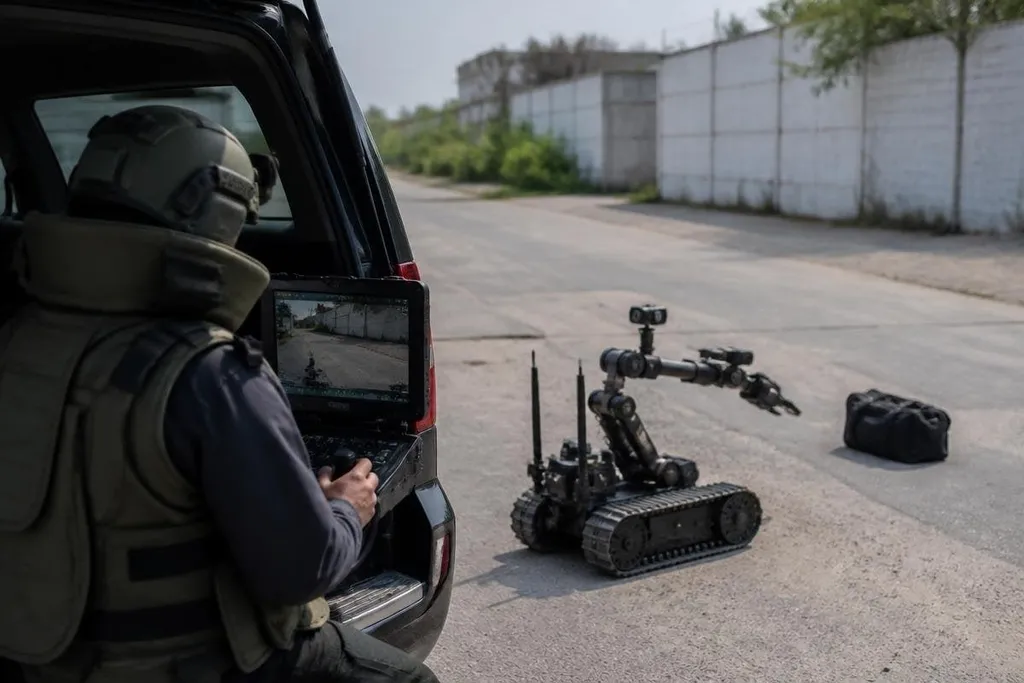
A bomb-disposal robot lets a technician inspect and handle a suspected explosive device from a distance. The robot carries cameras, sensors, and a powered arm, while the technician works from a protected position and controls each move.
- The operator sees the device through cameras mounted on the robot.
- A tracked base carries the robot across roads, floors, and rough ground.
- The arm can move tools or objects without placing a person beside the device.
Distance comes first
Physical separation is the robot’s main safety benefit. The technician can stay behind a vehicle, wall, or other cover while sending the robot toward the device.
That distance changes the result of a failure. If the device detonates, the robot may be damaged, but the technician is farther away from the blast, fragments, heat, and pressure.
The robot does not make the area safe. It gives the technician more time and space to work.
Most bomb-disposal robots use tracked drive systems because tracks spread the robot’s weight and help it cross uneven ground. The operator drives it with a handheld control unit, watching video from cameras on the base, arm, or tool head.
The video feed also shows limits. A camera gives the operator a view from one position, so the technician may need to move the robot before seeing behind an object or into a narrow gap. Poor light, smoke, dust, or a blocked camera can make each movement harder.
The arm does the risky work
A robot arm keeps the technician’s hands away from the device. Depending on the robot and its tools, the arm may move an object, open a door, cut material, place a disruptor, or carry a camera close to a suspicious package.
The arm has to do more than reach the target. It must hold position, move at a controlled speed, and avoid pushing the device with more force than the technician intends. A manipulator is the arm and hand system that carries out this work.
Some robots can change tools during an operation. A gripper may pick up an item, while a hook, cutter, water tool, or inspection camera handles a different task. The exact tool set depends on the robot and the procedure used by the bomb team.
I’d rather see a slow arm move with a steady video feed than a fast arm that gives the operator less control. Speed matters when a robot must cross open ground, but careful movement matters more beside an explosive device.
The technician can also use the robot to place equipment near a device. That may let the team inspect the package, disrupt it, or move it to a safer location without sending a person forward. The robot’s job changes with the threat and the team’s plan.
Sensors give the operator more information
Cameras are only one part of the control system. A robot may carry lights, microphones, thermal cameras, radiation sensors, or tools for examining the device. Each sensor answers a different question, such as what the package looks like, where it is damaged, or whether a person can see inside it.
An X-ray system may also travel on the robot. X-ray images can help a bomb technician inspect the contents of a package without opening it, but the image still needs a trained person to read it. A robot can move the equipment into place; it does not replace the judgment behind the procedure.
The technician still makes the call after the scan. Reporting on bomb-disposal robots from Robot24.com can tie that decision to the robot’s sensor feed and control link, setting up the limits that follow.
Where the robot still falls short
A robot can lose traction, snag its cable, damage a camera, or run out of battery. Radio signals can weaken around buildings and other obstacles. A tether can keep the link running, but the cable can also limit where the robot goes.
The arm has physical limits too. It may lack the reach, lifting force, grip, or tool needed for a particular device. A heavy robot can cross a floor well and still struggle on stairs, soft ground, or a narrow passage.
Remote control also adds delay and distance between the technician’s hands and the tool. The operator has to judge depth from camera images, move through a limited view, and keep track of the robot’s position. Those limits make training and careful planning part of the safety system.
A practical check before deployment
Before sending a robot toward a suspected device, a team can check:
- Route: confirm the robot can reach the area without losing traction or trapping its cable.
- View: check that the cameras and lights show the approach, the device, and the working area.
- Tool: fit the arm with the tool needed for inspection or disruption.
- Control link: test the radio or tethered connection from the planned operator position.
- Recovery: decide how the team will retrieve the robot if the arm, tracks, or power system fails.
These checks keep the robot in its proper role. It carries risk closer to the device, while the technician stays farther away and makes the decisions that the machine cannot make.
The open question is how much work future robots can perform without direct control. Until a robot can prove that in real bomb-disposal operations, distance, cameras, and a trained operator remain the safety plan.